
Search for Project Partner!
We are searching for project partners to conduct measurements utilizing various MPI scanners. Our current focus involves the development of phantoms and we are planning MPI measurements for the year 2026 / 2027. We are grateful for every collaboration and look forward to exciting measurement campaigns.
--> Contact us now!
We offer positions for Bachelor and Master theses in our project at PTB Berlin. If you are interested and for further information, please email bruno.kluwe(at)ptb.de
--> Website LINK PTB: PTB Workgroup 8.23
--> Contact
Project News
Biomagnetic Sensing International Summer School Kiel
September 2026
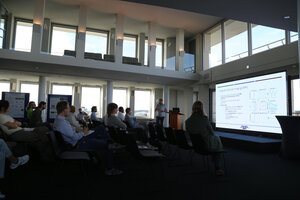
From September 8 to 11, 2026, we had the opportunity to participate in the Biomagnetic Sensing Summer School in Kiel and present our results in a talk followed by a lively discussion.
During the event, we were able to present our project, "harmoMPI," as well as its results in the form of the phantoms and MPI images developed as part of the project.
We would like to sincerely thank the organizers for this opportunity, with special thanks to Dr. Eric Elzenheimer on behalf of the organizing team, as well as for the many interesting presentations, the productive scientific exchange, and the valuable insights we gained.


Magnetic Carrier Conference in Paris
May 2026
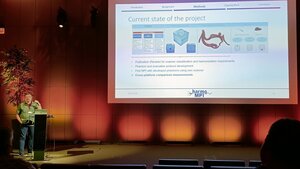
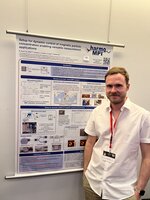
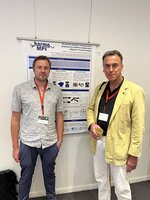
We participated in the 15th International Conference on the Scientific and Clinical Applications of Magnetic Carriers in Paris. In a scientific talk, we introduced the project and, in two poster sessions, we shared initial results on phantom development and imaging experiments. The conference offered an excellent opportunity to connect with the community, engage with our current project partners, promote the project, and initiate new collaborations. A truly engaging and productive conference!
harmoMPI visits the UK MPI scanner site - Intermag Manchester
April 2026
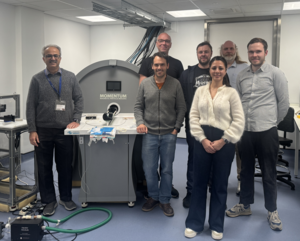
We attended the IEEE Intermag in Manchester and presented the harmoMPI project to a broad audience. As a common activity between nexMPI and the research project harmoMPI, the MPI scanner site in Liverpool was visited by representatives of harmoMPI at University of Liverpool, UK, to discuss and plan first harmonizing MPI measurements.
Project Presentation at IWMPI 2026 in Beijing
March 2026
We had the opportunity to present the harmoMPI Project at IWMPI 2026 in Beijing! It was an inspiring gathering of the MPI community featuring excellent keynote talks, including additional preliminary work on human imaging. We received valuable feedback from the community and are excited about future collaborations.

Project Presentation at SF Nano 2025 in Lyon
November 2025
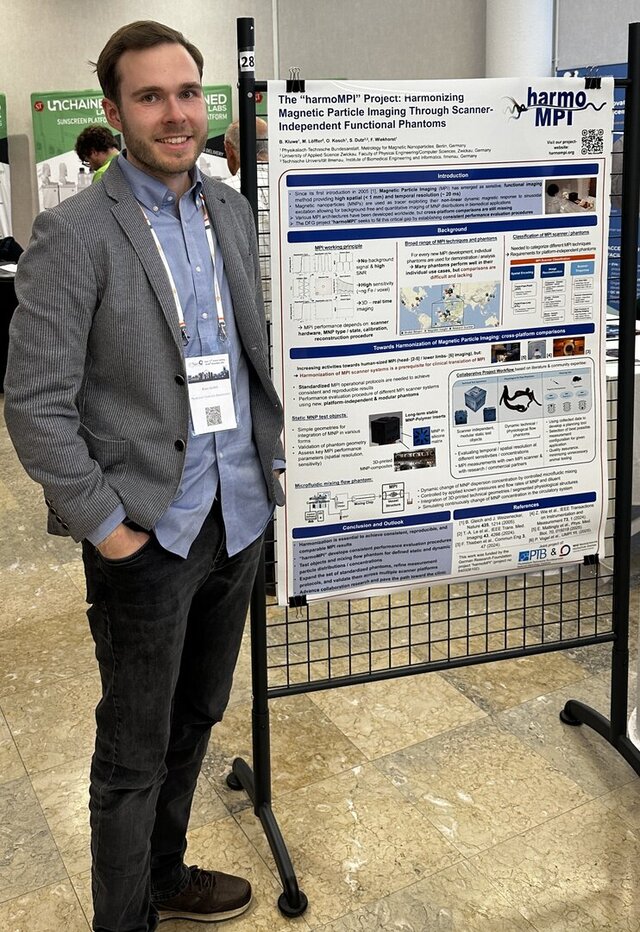
Our team participated in the SFNano conference 2025 in Lyon, where we presented our project through an engaging poster presentation. The conference, expertly organized by SFNano, excelled in fostering connections among nanomedicine and nanotechnology researchers, featuring plenary lectures, specialized sessions, and a dedicated poster exhibition. We were able to experience numerous exciting presentations, introduce our project to a large audience and engage in stimulating discussions.
Attending the German Ferrofluid Workshop 2025
We took part in the 25th German Ferrofluid Workshop from September 30th to October 2nd in Benediktbeuern. In addition to presenting the first results of our project, we also showcased MPS measurements used to investigate an aneurysm phantom. Besides the interesting talks, we joined a hike and a guided tour through Garmisch-Partenkirchen, as well as an engaging mountain lecture. We are looking forward to the next workshop in 2026.
Project Presentation at BMT 2025
Joint Conference of the Swiss (SSBE), Austrian (ÖGBMT)German (VDE DGBMT) Societies for Biomedical Engineering
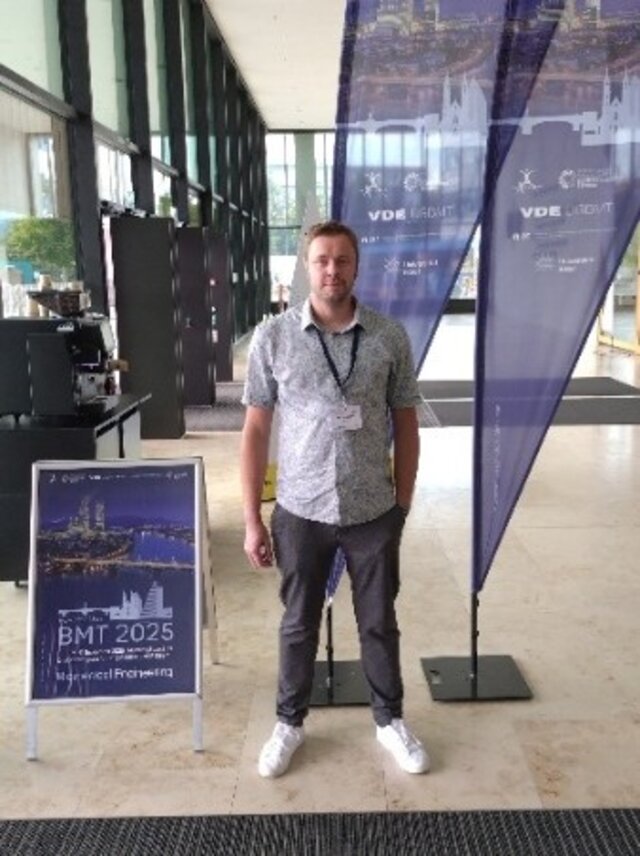
Attending BMT 2025 from September 9–11 in Muttenz. We introduced our project to an international audience for the first time. Our talk was held during the session “FS New Developments and Advancements in Magnetic Methods in Medicine 2”, led by Silvio Dutz and Kerstin Pansegrau. We look back on many interesting talks, stimulating discussions, and a very pleasant conference.
Press Release: project start "harmoMPI"
Berlin, 18 August 2025 — A research collaboration between the Physikalisch-Technische Bundesanstalt (PTB) and the Westsächsische Hochschule Zwickau (WHZ) has launched the project “harmoMPI: Harmonization of quantitative magnetic particle imaging (MPI) with scanner-independent functional phantoms for preclinical investigations”, funded by the German Research Foundation (DFG). With support from the MPI research community, this joint initiative aims to harmonize Magnetic Particle Imaging (MPI) technology across diverse platforms, pushing forward MPI research and paving the way toward clinically relevant applications.
MPI is a promising tomographic imaging modality known for its high sensitivity and spatiotemporal resolution using magnetic nanoparticles as a tracer for a wide range of biomedical applications. Since its debut in 2005, a variety of preclinical MPI scanner architectures have emerged, ranging from commercial systems to custom-built research devices. However, cross-platform comparisons remain challenging due to the lack of standardized phantoms and evaluation methods.
“harmoMPI” seeks to fill this critical gap by developing platform-independent, modular phantoms that enable reliably assessment of key performance parameters across different MPI systems. In addition to developing a consistent performance evaluation procedure, another key goal of the project is the creation of a planning tool that helps researchers select the optimal MPI scanner configuration for any specific experiment. This enhances the efficiency of experiment planning, supports quality assurance, and minimizes unnecessary animal testing by reducing trial-and-error approaches.
Ultimately, the harmonization driven by “harmoMPI” will accelerate the transition of MPI from laboratory research to practical biomedical applications, delivering benefits to both scientific discovery and clinical practice.

- Biomagnetic Sensing International Summer School Kiel
- Magnetic Carrier Conference in Paris
- harmoMPI visits the UK MPI scanner site - Intermag Manchester
- Project Presentation at IWMPI 2026 in Beijing
- Project Presentation at SF Nano 2025 in Lyon
- Attending the German Ferrofluid Workshop 2025
- Project Presentation at BMT 2025
- Press Release: project start "harmoMPI"
Project HarmoMPI Timeline
Biomagnetic Sensing International Summer School in Kiel
Magnetic Carrier Conference in Paris
IEEE Intermag 2026 in Manchester and visit of the UK MPI scanner facility in Liverpool
Project Poster Presentation at EMIM in Ljubljana
Project Presentation at IWMPI 2016 in Beijing
Participation at the Biosignal Workshop 2026 in Innsbruck
Poster Presentation at SF Nano 2025 in Lyon
Participation at the 21st Ferrofluid-Workshop 2025 in Benediktbeuern
Projectmeeting in Zwickau
Meeting at WHZ in Zwickau to discuss the latest developments and plans for the project
Project Presentation at BMT 2025
HarmoMPI Website goes online!
Kick-off Meeting
First project meeting at PTB in Berlin!